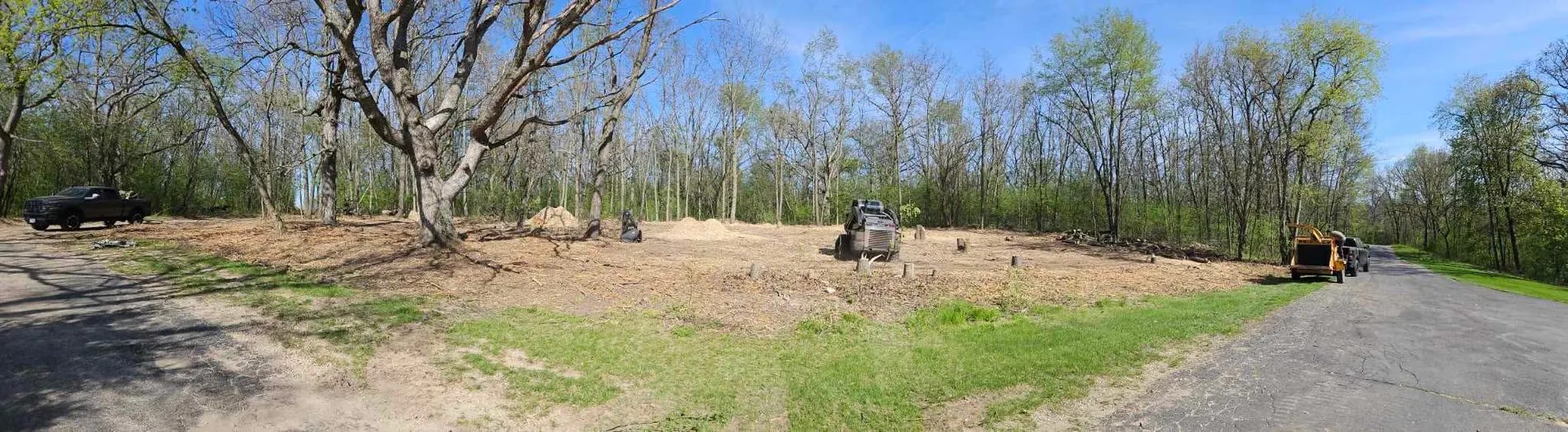
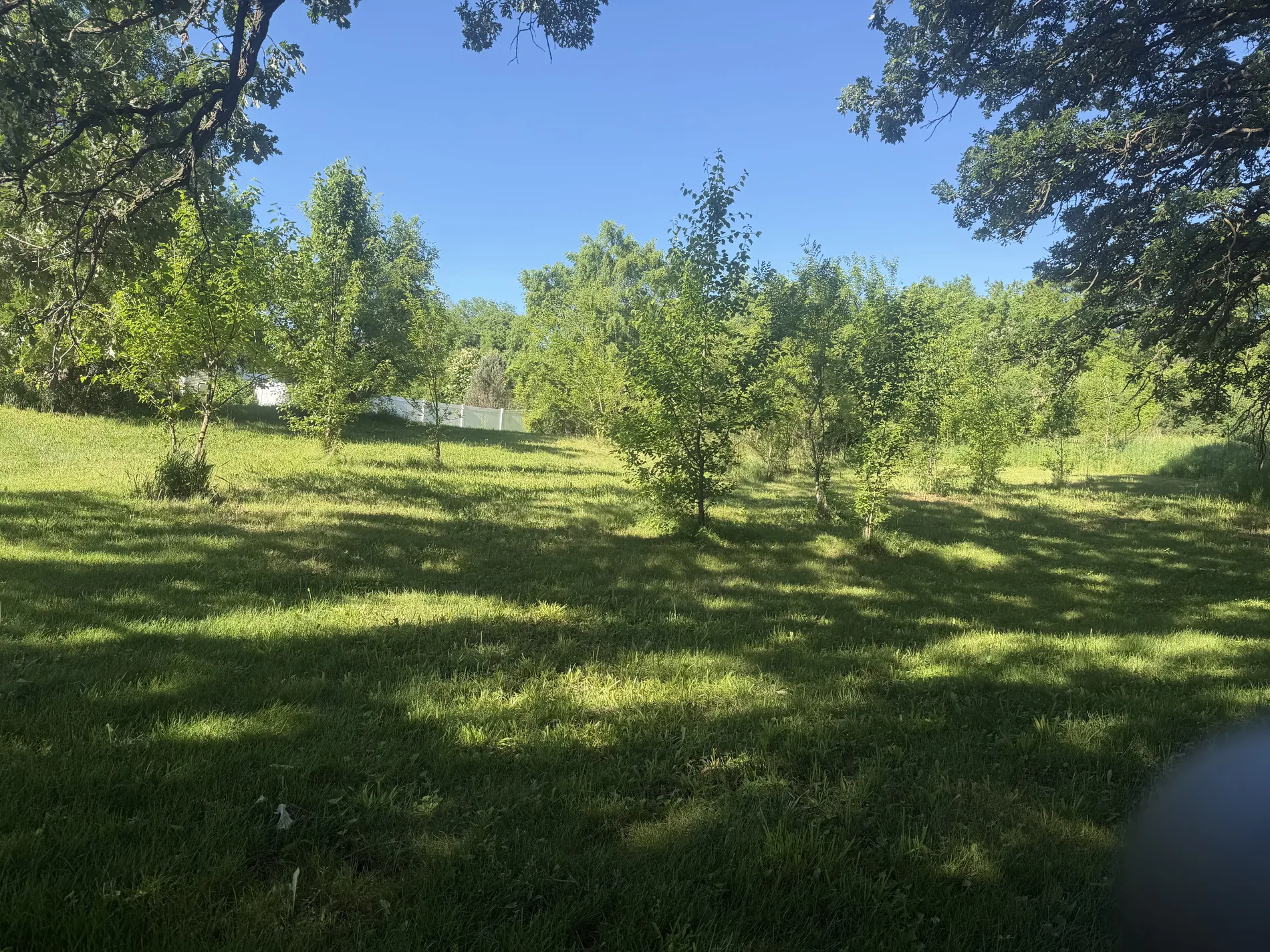
How much does bush hogging cost per acre in Wisconsin?
Published cost guides put bush hogging at about $40 to $250 an acre, or $75 to $150 an hour. Most fields land between $70 and $150 an acre. Brush hogging prices spread that wide for one reason: the number of seasons a field has gone uncut sets how slow the machine has to run.
What does bush hogging cost per acre?
Most published guides land in the same place. Roughly $50 to $75 an acre for a field mowed within the last year. Waist high growth runs $75 to $150. Saplings push it to $150 to $250. One published guide puts the full spread at $40 to $200 an acre.
| Field condition | Cost per acre | What it looks like |
|---|---|---|
| Mowed in the last year | $50–$75 | Grass and low weeds under a foot |
| One or two seasons uncut | $75–$150 | Waist high goldenrod and light brush |
| Three or more seasons uncut | $150–$250 | Chest high growth, scattered saplings an inch or two thick |
| Reverting to woods | Priced as clearing | Thicker stems, thickets, young trees |
Condition sets the rate and everything else nudges it. A tractor slows on side hills and around fence corners. Narrow gates and soft ground add time before a blade turns. Old fence wire, buried concrete and field stone cost the most, since the machine stops for each one. One guide notes that dense stems three to four inches thick double the time per acre against light growth. Our bush hogging and field mowing work gets priced off what is standing the day we look.
Is it better to pay by the acre or by the hour?
Per acre is the common quote on open, measurable fields. Hourly is common on small lots, odd shapes and first cuts where nobody knows what is under the growth. Published guides put hourly work at $75 to $150, with about $110 as the middle, and per acre work at $40 to $250.
Either way, a minimum charge usually applies. Guides put it at $150 to $350 per visit. Lots under an acre get quoted as a flat rate rather than by the acre. On a small parcel, the minimum simply is your price.
Ask which model a quote uses before you compare two. One guide reports 15 to 20 percent off for repeat visits.
What do 1, 5 and 10 acres usually run?
Run the published bands out to real field sizes and the pattern shows. Small parcels get priced by the minimum. Bigger parcels get priced by the acre, and the rate drops once the machine runs without stopping. The table below applies those bands as straight arithmetic.
| Field size | Light growth | Heavy growth | Why |
|---|---|---|---|
| 1/2 acre | $150–$350 | $150–$350 | Minimum charge, not acreage |
| 1 acre | $150–$350 | $150–$350 | Trip cost matches a ten acre trip |
| 5 acres | $250–$375 | $750–$1,250 | Per acre rate takes over |
| 10 acres | $500–$750 | $1,500–$2,500 | Rate drops on open ground |
Bush hogging leaves the cut material where it falls. That is why rough cut mowing for fields and pastures prices so far below clearing.
How long does it take to bush hog an acre?
One published guide gives one acre of light brush on flat ground at one to two hours with a mid size rotary cutter. Its worked example puts a six foot cutter over a flat, lightly brushed acre in about an hour and a half. Rugged or dense ground takes three to four hours or more.
Height matters less than stem thickness. Tall grass falls in one pass at road speed. Woody stems drop the machine to a crawl, and thick stands often need a second pass.
That is the math behind the minimum charge. On a half acre lot the mowing might take 40 minutes. Loading, trailering and unloading eat two hours.
Is renting a brush hog cheaper than hiring one?
Rental listings put a five foot rotary cutter at roughly $62 for four hours, $77.50 a day or $244.50 a week. That is the attachment alone. You still need a tractor with the horsepower to turn it, plus a trailer.
Horsepower is where the plan usually breaks. Manufacturer specs call for at least 25 PTO horsepower on a five foot cutter rated to two inch stems. Wisconsin’s 2025 custom rate survey puts farm tractor rental at $52.00 an hour on average across a small sample, with reported rates from $25 to $85.
Add the attachment, the tractor, the fuel and a Saturday. A small field lands close to the $150 to $350 a hired crew charges. Renting pays off if you already own the tractor.
When is the best time to bush hog a field in Wisconsin?
Southern Wisconsin gives you a long window and a few dates to work around. The National Weather Service puts the average frost free season at 181 days in Milwaukee, April 27 to October 22. Madison runs 158 days. The state climatology office puts the southern tier of counties at 160 to 170 days.
Ground nesting birds are the first constraint. For land in a federal conservation program, USDA sets Wisconsin’s primary nesting season at May 15 to August 1. Work inside that window needs approval. Confirm your own contract dates with the county FSA office.
Wisconsin law names Canada thistle a noxious weed and makes the landowner destroy it, counting cutting timed so the plant never reaches bloom. The DNR calls for mowing at least three times a season, when buds have formed but not opened. Mowing after flowering spreads seed instead.
Wild parsnip runs a tighter clock. UW extension research puts the mowing window in southern Wisconsin near the first of July, after secondary flower heads open and before seed enlarges. Its sap burns skin in sunlight.
Late fall is the quiet bonus, since firm or frozen ground carries equipment without rutting a wet field.
When is a field past bush hogging?
Stem diameter decides it. Manufacturer specs rate single spindle rotary cutters at one inch on light duty models. Heavy duty models go to three or four inches. Past that rating, stems bend under the deck instead of cutting, and the gearbox pays for it. Our own cutter works the lighter end of that range, so saplings past an inch or two move the job to mulching.
At that point the job changes and so does the price. Published guides put light land clearing at $1,200 to $2,500 an acre, roughly ten times what mowing the same ground costs. Grinding heavy brush and saplings into mulch is the usual answer, and our Wisconsin land clearing prices by the acre breaks it down.
The real test is what you want next year. Mowing knocks the top off and the roots push back. Grinding takes the stand to mulch and buys years. Here is a side by side look at every way to clear land, plus taking out thick underbrush along fence lines and edges.
FAQ
How much does it cost to bush hog 5 acres? At the per acre rates in published guides, five acres of light growth runs about $250 to $375, and five acres of heavy growth with saplings runs about $750 to $1,250. At that size you are past the minimum charge, so the per acre rate does the work.
How much does bush hogging cost per hour? Published guides put hourly bush hogging at $75 to $150, with about $110 as the middle of that range. A compact tractor with a five foot cutter sits low. A bigger machine on rough, overgrown ground sits high. Most quotes also carry a minimum of $150 to $350.
How many acres can a bush hog cut in an hour? Figure half an acre to an acre an hour in easy going. One published guide gives one acre of light brush on flat ground at one to two hours, with a six foot cutter clearing a flat acre in about an hour and a half. Dense stems three to four inches thick can double the time per acre.
When should I bush hog a field in Wisconsin? Late April through early May and again in fall are the easy windows. Ground nesting birds sit on fields from mid May into August, and land in a federal conservation program carries a nesting season rule of May 15 to August 1. Check yours with the county FSA office.
Can a bush hog cut down small trees? A rotary cutter handles stems up to its rated capacity. Manufacturer specs run from one inch on light duty models to three or four inches on heavy duty ones. Past that, the stems bend under the deck instead of cutting, and the field needs a mulching head rather than a mower. On our jobs, saplings past an inch or two go to the mulcher.
Get a real number for your land
Every field prices differently, so a published range only gets you close. We cover Whitewater, Lake Geneva, Elkhorn and the counties around them, and every estimate is free and done on site with a price match behind it. Call 262-249-6360 or have us come out and price it.