Land clearing methods compared: which one is right for your property?
For most Wisconsin lots, forestry mulching is the default. One machine grinds brush, saplings, and small-to-medium trees into mulch on the spot, leaves the soil intact, and costs the least. You step up to traditional dozer clearing when the land has to end up bare and gradeable with the stumps gone. Burning, excavator work, and hand clearing each fill a narrower role. The right pick comes down to what you want the ground to do next.
Here is how the main land clearing methods stack up for a property around Whitewater and Walworth County.
The methods at a glance
| Method | Best for | Cost per acre | Debris | Soil disturbance | Stumps |
|---|---|---|---|---|---|
| Forestry mulching | Brush, small-medium trees, trails, wet or shoreland sites | $1,000–$3,000 | None, left as mulch | Minimal | Left in ground |
| Traditional dozer (grub-and-haul) | Building sites, full clearing, grading | $3,000–$6,000 | Hauled or burned | High | Removed |
| Excavator and grapple | Heavy timber, stump and root extraction | $2,500–$6,000 | Piled to haul or burn | Moderate to high | Removed |
| Controlled burn | Large rural acreage, restoration upkeep | $100–$1,000 | Ash only | Minimal | Left, charred |
| Hand clearing | Tight access, steep ground, selective cuts | $3,000–$8,000+ | Hauled or chipped | Minimal | Left, selective |
Forestry mulching
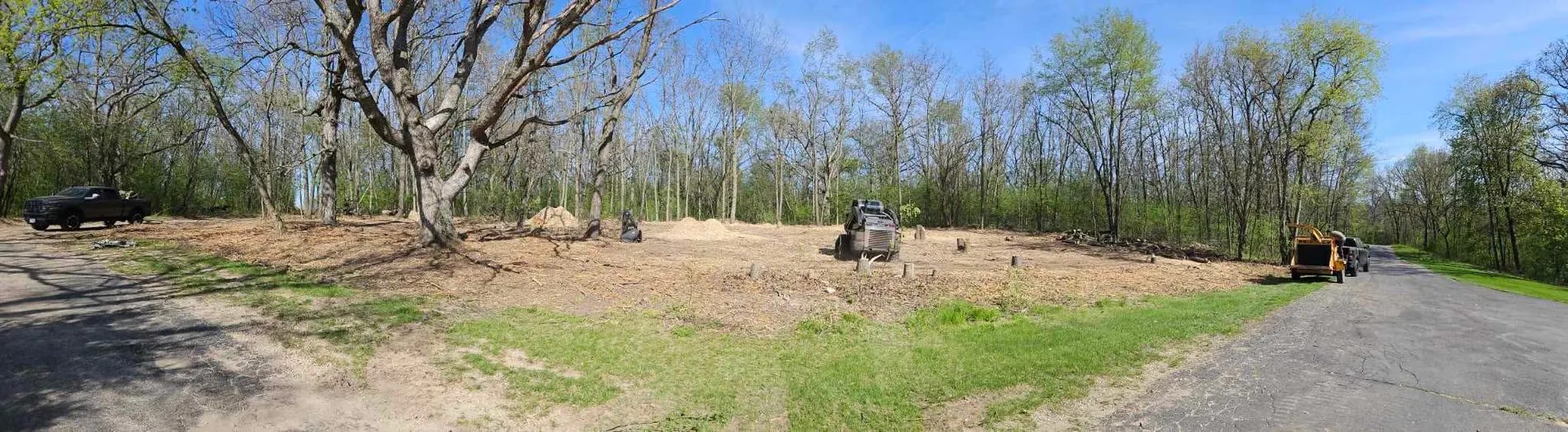
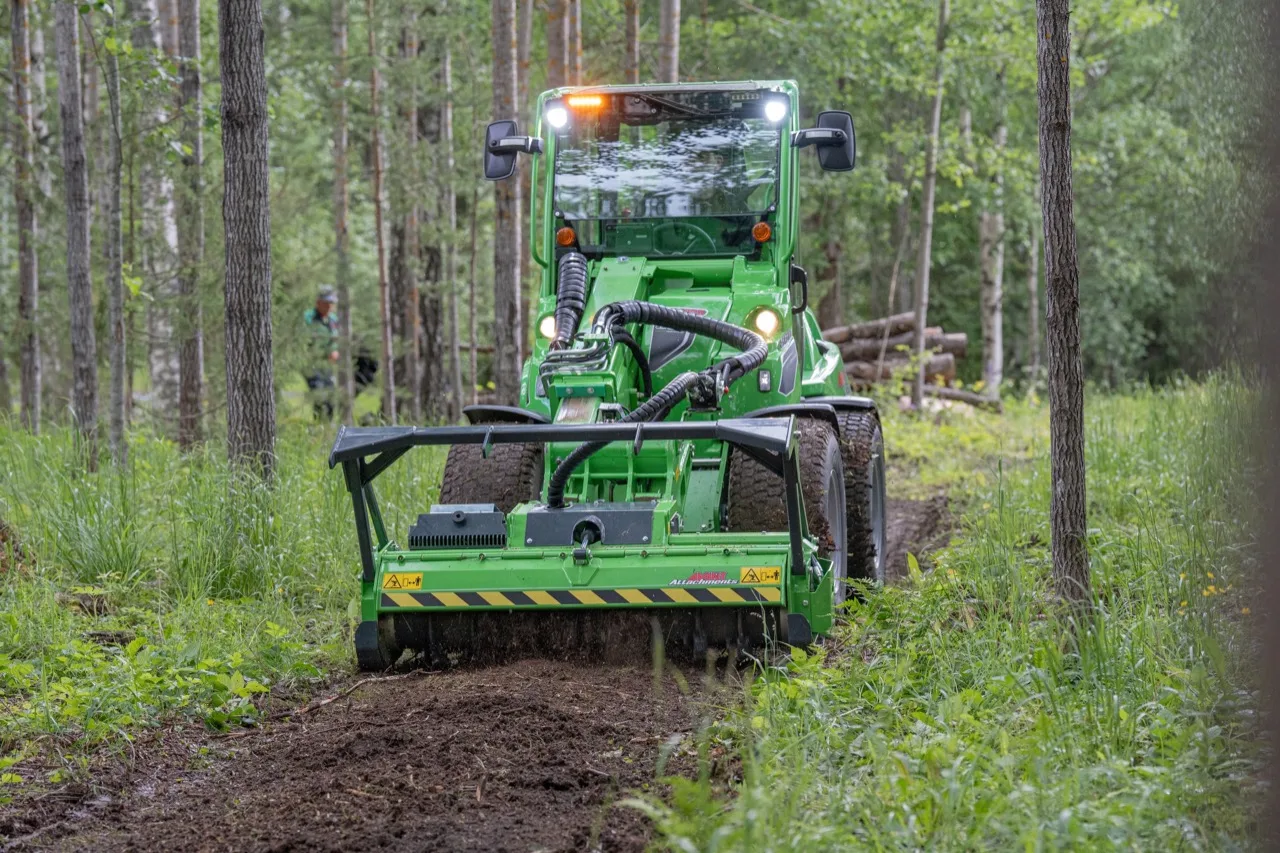
Forestry mulching is a one-step job. A tracked machine cuts and grinds standing vegetation into a layer of wood chips that stays on the site, so there is no separate hauling, burning, or debris pile. That is why it is the fastest and cheapest way to handle brush and small-to-medium trees, and the mulch layer it leaves behind suppresses regrowth, holds moisture, and guards against erosion.
The trade-off is that the roots and stumps stay in the ground. Mulching gives you clean, walkable, usable land, but it is not finished site prep for a foundation. Its other strength is soft ground: the low-ground-pressure tracks spread the machine’s weight, so it works wet or sloped ground with far less rutting than a dozer. For more on that service, see our forestry mulching page.
Traditional dozer clearing (grub and haul)
This is the method when the land has to end up open and buildable. A dozer pushes over the trees, rips out the root balls, and piles the debris to be burned or trucked off, and it can rough-grade the site in the same trip. The cost is higher because of the disposal, and it disturbs the most soil: it strips and compacts the topsoil and leaves bare ground that needs reseeding to hold against erosion. For a house pad or a graded lot, that disturbance is the point.
Excavator and grapple
An excavator with a grapple or root rake is the surgical option for heavy work. It pulls large individual trees, extracts stumps and roots, separates soil from debris, and handles rocky ground better than a dozer. It still leaves a debris pile to deal with, but it gives you more control than pushing everything over with a blade.
Controlled burning
A planned, permitted burn is cheap per acre on large rural parcels and useful for prairie or woodland restoration. It is a maintenance and land-management tool, not a way to clear a buildable lot: it only consumes the vegetation, it leaves stumps behind, and it depends on weather, permits, and careful control of smoke and fire. For most property owners clearing a lot, it is not the answer.
Hand clearing
A crew with chainsaws gives you the most precision and the least disturbance, which matters when you are thinning understory around mature oaks or working a slope or tight space a machine cannot reach. It is also the slowest and most expensive per acre, so it is reserved for selective or access-limited jobs rather than open acreage.
Which method for a Wisconsin lot?
Three local conditions usually decide it.
Wet clay ground. Saturated clay ruts and compacts badly under a dozer. A low-ground-pressure mulcher is far gentler, and scheduling the work for frozen winter ground protects the soil even more.
Shoreland and wetland-adjacent sites. Near the area’s lakes and streams, Wisconsin limits how much you can disturb the soil. Because mulching leaves roots and topsoil in place, it tends to fit those limits better than grubbing, which pulls the root structure out. Check the rules first; our permit guide explains when they apply.
Buckthorn and invasive brush. Mulching is the efficient way to knock down a dense stand of buckthorn or honeysuckle, but cutting alone makes buckthorn resprout. Lasting control pairs the mechanical clearing with a stump herbicide treatment. The same logic applies to brush clearing in general.
If you are weighing the options against your budget, our cost-per-acre guide puts numbers to each method.
FAQ
What is the difference between forestry mulching and traditional land clearing? Forestry mulching uses one machine to grind standing brush and trees into mulch that stays on the ground, with the roots and topsoil left in place. Traditional clearing uses a dozer or excavator to push everything over, rip out the roots, and pile the debris to burn or haul away. Mulching is cheaper and gentler on the soil; traditional clearing leaves you bare, gradeable ground.
Does forestry mulching remove stumps and roots? No. Mulching grinds growth down to the ground and can take stumps flush, but the root systems stay in the soil. That is fine for clearing brush, trails, pasture, and view lines, but if you are putting in a foundation or need to grade the site flat, you need grubbing or excavation to pull the roots out.
What is the difference between clearing and grubbing? Clearing removes what is above the ground, the trees and brush. Grubbing goes below the surface to pull out stumps, roots, and buried debris so the ground can be graded and built on. A buildable lot usually needs both; a recreational or pasture clearing often needs only the clearing.
Which land clearing method is cheapest? Forestry mulching is usually the cheapest way to clear brush and small-to-medium trees, at roughly $1,000 to $3,000 an acre, because there is no debris to haul or burn. Controlled burning can be cheaper per acre on large rural parcels but is weather and permit dependent and only a maintenance tool. Hand clearing is the most expensive per acre.
Can you clear land near a lake or wetland in Wisconsin? Yes, but the rules tighten fast near water. Wisconsin’s shoreland zone and wetland rules limit how much you can disturb the soil close to a lake, stream, or wetland. Because forestry mulching leaves the roots and soil intact, it often fits those limits better than dozer grubbing, which removes root structure. Always confirm with the county and the DNR first.
What is the best time of year to clear wooded or wet land in Wisconsin? Winter is often best for wet or wooded ground in southern Wisconsin. Frozen ground carries heavy equipment with far less rutting and compaction, the leaves are down for better visibility, and the work is gentler on the soil. Mulching in particular is well suited to frozen-ground conditions.
Not sure which method your land needs?
That is what a site visit is for. Proper Grounds clears land across Whitewater, Lake Geneva, Elkhorn, and Walworth County with the method that fits the job, not just the one machine on the trailer. Tell us what you want the ground to do, and we will recommend the approach and put a free estimate in your hands.