Do you need a permit to clear land in Wisconsin?
It depends almost entirely on where you are clearing and how much. Clearing brush and trees on dry upland, away from water and wetlands, and disturbing less than an acre, usually needs no state permit. You cross into permit territory once the job disturbs an acre or more, touches a wetland, or falls inside the shoreland zone near a lake or stream. When water is anywhere nearby, confirm the rules before any equipment moves.
This is general guidance, not legal advice, and local rules vary. Before any land clearing job around Whitewater or Walworth County, here is what to check.
The short answer: water, wetland, and acreage
Three triggers decide whether you need a permit in Wisconsin:
| Trigger | What it means |
|---|---|
| One acre or more disturbed | State construction stormwater permit required |
| A wetland on the site | DNR wetland permit required to disturb it |
| Inside the shoreland zone | County rules near lakes and streams apply, often at any size |
If none of those apply, a typical upland clearing job usually needs no permit. If any of them do, you need to sort it out first.
The one-acre rule (state stormwater)
This is the clearest line the state draws. Once a project disturbs one acre or more, by clearing, grading, excavating, or stockpiling, the Wisconsin DNR requires a construction site stormwater permit, along with an erosion and sediment control plan. You file a notice of intent at least 14 working days before work starts.
One detail trips people up: the whole project’s acreage counts toward that one acre, even if it is cleared in phases so less than an acre is open at any one time. A five-acre clearing done a half-acre at a time still crosses the threshold.
Wetlands
Wetlands are protected, and clearing one is regulated. Disturbing a wetland by filling, excavating, grading, draining, or doing mechanized clearing that removes root structures by bulldozing or grubbing requires a DNR wetland permit. General permits cover smaller impacts, up to 10,000 square feet, with a shorter review; larger or higher-quality wetlands need an individual permit.
This is one reason forestry mulching matters near sensitive ground: it grinds the growth but leaves the roots and soil in place, which is a much lighter touch than grubbing out the root structure. It does not exempt you from the rules, but it disturbs less.
The catch is that wetlands are not always obvious. The DNR’s mapping tools show mapped wetlands for planning, but the legally definitive boundary takes a field delineation by a trained professional. If there is any chance a wetland is on the parcel, find out before you clear.
The shoreland zone (the big one near lakes)
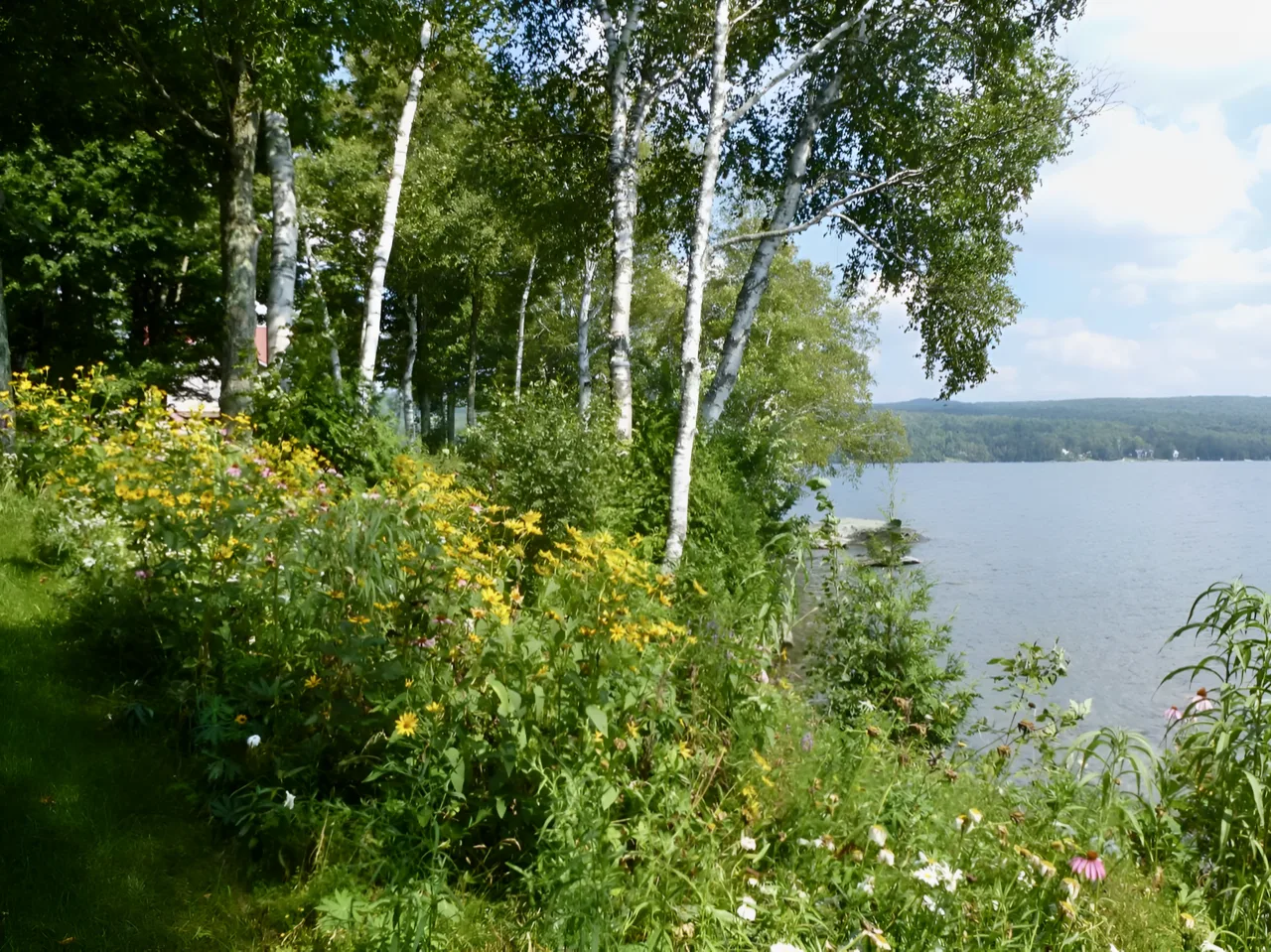
This is the rule that catches the most people in lake country, and Walworth County has plenty of it. The shoreland zone is the land within 1,000 feet of the ordinary high water mark of a lake, pond, or flowage, and within 300 feet of a navigable river or stream. Around Geneva Lake, Lake Como, and Delavan Lake, a lot of property sits inside it.
Wisconsin’s shoreland rules require counties to protect a vegetative buffer reaching at least 35 feet inland from the water. Inside that 35-foot strip, removing trees and shrubs is restricted. Some things are still allowed there, including routine maintenance, removal of invasive, diseased, and hazard plants, and a limited view-and-access corridor. The exact size of the allowed corridor is set by the county, so confirm that figure with Walworth County rather than assuming.
Walworth County specifics
Walworth County takes this seriously. It was the first county in Wisconsin to adopt a construction site erosion control ordinance, back in 1990, and its shoreland rules are stricter than the bare state minimum.
The key local rule: any land disturbance, including the removal of ground cover, within 1,000 feet of a lake or 300 feet of a stream requires a county land-disturbance permit, regardless of size. Changing the grade within 75 feet of the water generally is not authorized at all. Disturbing an acre or more brings in the county stormwater permit alongside the state one, and smaller thresholds can apply, so confirm the exact figure with the county before you assume a small job is clear.
When you need to verify, the county’s Land Use and Resource Management office handles zoning and land disturbance, and the Wisconsin DNR’s Southeast Region office covers wetlands and waterways. A quick call before clearing is far cheaper than fixing a violation after.
The normal upland job
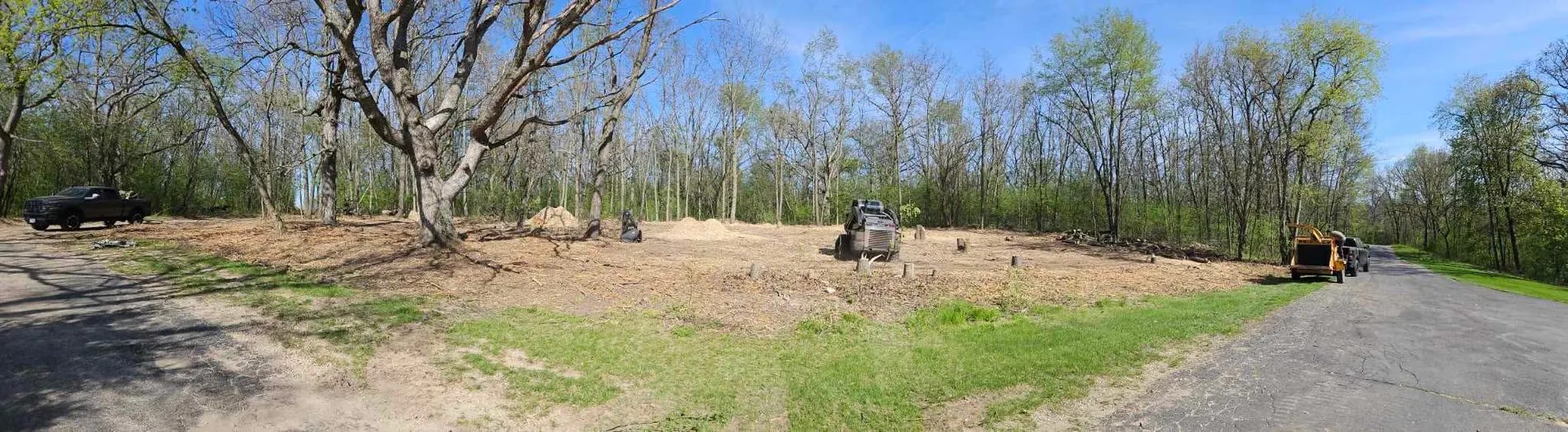
Most clearing is not near water. If you are clearing brush and trees on dry upland, with no wetland on the parcel, outside the shoreland zone, and under an acre of disturbance, you generally need no state stormwater permit and no county land-disturbance permit. The job can still trip a requirement if it reaches an acre, if a mapped wetland turns up, or if any part of the work falls within 1,000 feet of a lake or 300 feet of a stream. Your town may also have its own rules.
One more step that applies to every job, permit or not: call Diggers Hotline at 811 before any digging to have underground utilities marked. It is free, it is the law, and it keeps a stump grinder away from a buried line.
FAQ
Do you need a permit to clear trees on your own property in Wisconsin? It depends on where and how much. Clearing brush and trees on dry upland, away from water and wetlands, and disturbing less than one acre, usually needs no state permit. You cross into permit territory once you disturb an acre or more, touch a wetland, or work inside the shoreland zone near a lake or stream. County and town rules can apply on top of the state’s, so confirm locally before you start.
How many acres can you clear without a permit in Wisconsin? Disturbing less than one acre avoids the state construction stormwater permit, which kicks in at one acre or more. That acreage threshold is the clearest state line. It is not a blanket exemption, though: wetland and shoreland rules apply no matter the size, and a county like Walworth can set smaller local thresholds. Check with the county before assuming a small job is exempt.
Do I need a permit to remove trees near a lake in Wisconsin? Usually, yes. Land within 1,000 feet of a lake or 300 feet of a navigable stream sits in the shoreland zone, where vegetation removal is regulated. In Walworth County, any land disturbance, including removing ground cover, within that zone requires a land-disturbance permit, and the strip closest to the water is a protected buffer. Confirm the specifics with Walworth County before clearing near water.
What is the 35-foot shoreland buffer in Wisconsin? Wisconsin’s shoreland rules require counties to protect a vegetative buffer reaching at least 35 feet inland from a lake or stream’s ordinary high water mark. Inside that strip, removing trees and shrubs is restricted, though limited maintenance and the removal of invasive or hazard plants are generally allowed. A limited view-and-access corridor is also permitted; confirm the exact allowance with your county.
Do you need a permit to grade or fill land in Wisconsin? Often, yes. Grading or filling in a wetland, floodplain, or the shoreland zone is regulated, and disturbing one acre or more triggers the state stormwater permit on its own. In Walworth County, changing the grade within 75 feet of the water generally is not authorized. If your clearing job involves moving dirt near water, check with the county and the DNR first.
How do I find out if there is a wetland on my property in Wisconsin? Start with the Wisconsin DNR’s mapping tools, like the Surface Water Data Viewer and the Wisconsin Wetland Inventory, which show mapped wetlands for planning. Those maps are a guide, not the legal boundary. To know for certain before clearing, have a trained professional do a field wetland delineation on the property.
Let us handle the rules with the clearing
Permits, wetlands, and shoreland buffers are a lot to track, and they change from the state level down to your town. Proper Grounds clears land across Whitewater, Lake Geneva, Elkhorn, and Walworth County, and we know which rules tend to apply where. Ask for a free on-site estimate and we will walk the parcel, flag anything that looks like it needs a permit, and point you to the right office before the work begins.